
A polished presentation does not tell you whether a project will be delivered at the agreed scope or by the date your team needs the space. For a corporate office, you need to understand who is responsible for planning, specification, supply, installation and close-out - and compare providers on the same brief.
Send every shortlisted provider the same requirements, ask the questions below and request evidence wherever the answer affects cost, timing or accountability. That way, you compare the terms of the work, not just the promises.
15 questions to ask
1. What exactly is included in your proposal?
Ask for a stage-by-stage scope: planning, design, specification, supply, delivery, installation and handover. Request exclusions separately. “Turnkey” should be translated into a list of actual deliverables.
2. Can you show projects of a comparable scale?
Ask for examples with similar headcount, building conditions and scope. Clarify what the provider delivered, rather than assuming every item shown in a finished office was part of its work.
3. How do you validate that the layout will work for our team?
Ask what inputs are needed and how the plan accounts for work patterns, meetings, privacy, storage and growth. Request the reasoning behind the layout, not only a polished visual.
4. What will we receive for review and approval?
Confirm whether the package includes dimensioned plans, visualisations, a furniture schedule, specifications and samples where needed. Agree on the format and approval rounds.
5. Who will own the project after contract signature?
Identify the day-to-day project lead, how decisions are recorded and who covers in their absence. Your team should know where to take a question and who is accountable for closing it.
6. What does the schedule look like from brief to handover?
Ask for milestones and dependencies covering approval, procurement, delivery, installation and acceptance. Dates matter, but so do the client decisions on which those dates rely.
7. Which lead times are confirmed for the specified items?
Request item-level timing and the assumptions behind it. A general estimate is not proof of stock or a confirmed dispatch date for a particular model.
8. How will the furniture specification be verified?
Confirm manufacturer, model, item code, finish, dimensions and configuration. For critical selections, ask for a specification sheet or sample rather than approving a collection name alone.
9. How do you verify authorised status and product authenticity?
For branded products, request evidence of dealer status and product origin. Make sure the exact model is identified in the proposal and contract documents.
10. What warranty terms apply?
Ask for the written terms, covered items, start date, exclusions and service route. Do not assume a manufacturer's warranty automatically covers every element of the project.
11. Who is responsible for delivery and installation on site?
Agree who receives goods, arranges building access, coordinates installation and removes packaging. Check that delivery windows and building rules are reflected in the schedule.
12. How are acceptance and defects handled?
Ask how missing items, damage or installation issues are recorded and closed. Agree on an owner and a process for each open item.
13. How is the quotation structured?
Request separate lines for furniture, delivery, installation and other agreed work. Clarify currency, payment terms and provisional items. Compare totals only when the scope is comparable.
14. How are changes handled after approval?
Ask who can request a change, how a revised specification is recorded and how cost and schedule impacts are approved. A clear change process prevents decisions from disappearing in email threads.
15. Can you provide a reference for a similar project?
Ask for a reference contact or a published case study where the client has given permission. Confirm the project's scale, the provider's role and which outcomes can be substantiated.
How to compare proposals fairly
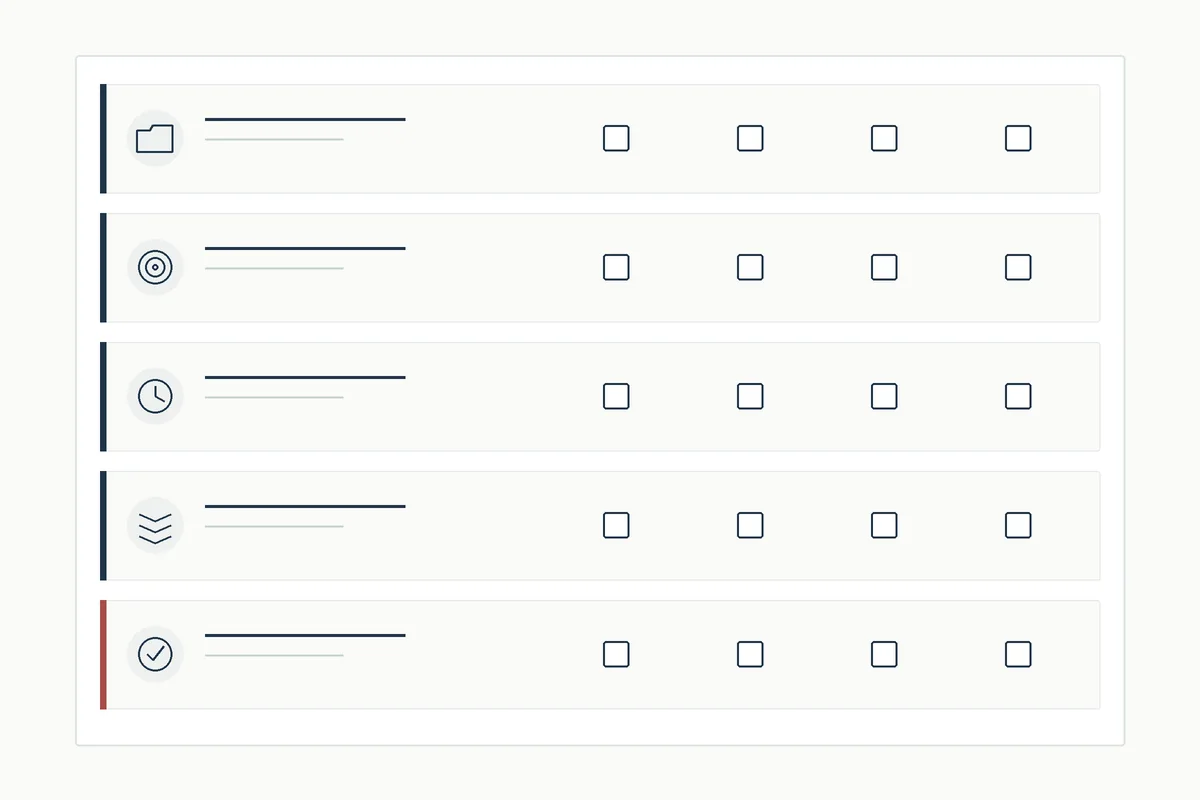
Put the answers in one comparison sheet and mark each point as documented, needs clarification or excluded. Do not compare only the total price. Two quotations may cover different furniture, different installation responsibilities and different assumptions.
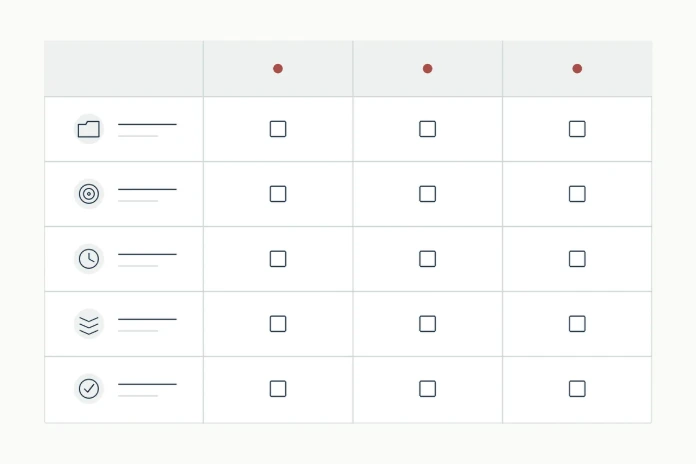
Compare | Record |
|---|---|
Scope | Included stages, exclusions and ownership of adjacent work. |
Solution | Layout, workstation and room counts, specification and samples. |
Timing | Item-level confirmations, milestones, dependencies and change conditions. |
Cost | Warranty terms, acceptance process, defect handling and after-sales route. |
Risk and support | Warranty terms, acceptance process, defect handling and after-sales route. |
Signals to clarify before signing
- “Everything is included” without a deliverables list or exclusions.
- A delivery date that is not tied to specified items and written confirmation.
- Visuals without a dimensioned layout or approved furniture schedule.
- Warranty promises that are not backed by written terms.
- No clear process for changes, acceptance or closing defects.
None of these points alone proves that a provider will fail. They are prompts for due diligence. Resolve them before they become assumptions in the contract.
Why the decision is about more than furniture
In a corporate project, furniture is one part of a connected workplace. Workstations need to fit the plan, meeting rooms need to serve the team's work, and delivery and installation have to match the building's calendar. Evaluate the provider against the agreed scope and evidence of delivery, not only its catalogue or headline price.
Frequently asked questions
Follow your organisation's procurement process. Whatever the number, give each shortlisted provider the same brief and request a comparable scope.
That depends on the project's constraints. Define mandatory requirements first, then compare cost, timing, scope and risk on the same basis.
At minimum, the agreed scope, specification, price and payment terms, schedule, responsibilities, change control, acceptance and warranty terms. Have the appropriate internal specialists review the final agreement.
A visit or client reference can reveal details that a presentation cannot. Treat it as a complement to specifications, documents and the contract, not a substitute for due diligence.
If you are building a shortlist, start with one consistent brief and test who can deliver the agreed scope from planning through installation.